Last Updated: March 18, 2026
What Is Lightning Lane Multi Pass and Single Pass? (2026 System Overview)
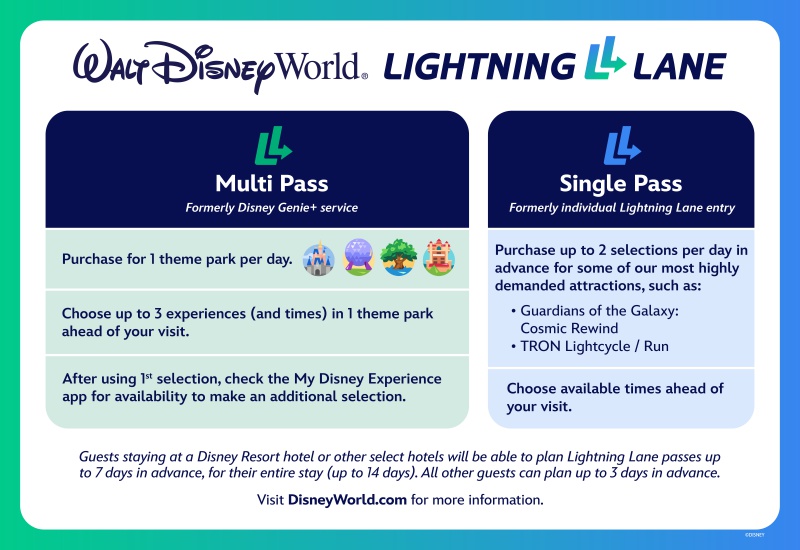
Lightning Lane Multi Pass and Lightning Lane Single Pass represent Disney’s current skip-the-line system at Walt Disney World, having replaced the Disney Genie+ service in July 2024. These paid services allow you to access special Lightning Lane entrances at participating attractions, significantly reducing your wait times compared to traditional standby queues. If you want to know which rides are worth prioritizing, check our complete ranking of every Walt Disney World ride.
The system operates through the My Disney Experience app exclusively. Lightning Lane Multi Pass covers multiple attractions throughout your park day, while Lightning Lane Single Pass provides access to individual premium attractions that aren’t included in the Multi Pass service. You can purchase both services on the same day if desired.
Unlike the old FastPass system that was free, both Lightning Lane options require separate daily purchases with pricing that varies based on date, park, and expected crowd levels. Disney doesn’t publish specific pricing in advance, instead displaying current rates only within the My Disney Experience app on your visit day.
trip cost Does Lightning Lane Cost? (2026 Pricing)
Lightning Lane pricing follows Disney’s dynamic model where costs fluctuate based on demand, seasonality, and park capacity. Prices vary by date and park, with no advance pricing information available outside the My Disney Experience app. You’ll need to check the My Disney Experience app for current pricing on your specific visit dates.
Lightning Lane Multi Pass operates on a per-person, per-park, per-day basis. If you’re park hopping, you’ll need separate Multi Pass purchases for each park you visit. Lightning Lane Single Pass uses individual attraction pricing that varies significantly based on the ride’s popularity and the specific date of your visit.
I recommend budget tipsing for Lightning Lane as an optional expense rather than a necessity, since all attractions maintain traditional standby lines. The investment makes most sense during peak seasons, holidays, and busy weekend periods when wait times reach their highest levels.
🎟️ Save on Disney World Tickets
Planning your Lightning Lane strategy starts with getting the best deal on park tickets. Here are our recommended authorized ticket sellers:
| Retailer | Discount | Refund Policy | Link |
|---|---|---|---|
| Undercover Tourist | Up to $97 off | 365-day refund guarantee | Get Tickets → |
| Get Away Today | Bundle & save | Flexible cancellation | View Deals → |
Planning to use Lightning Lane? Make sure you have your park tickets sorted first — Undercover Tourist often has better rates than buying direct.
Theme Park Shark may earn a commission from purchases made through these links at no extra cost to you. All retailers listed are authorized Disney ticket sellers.
Lightning Lane Multi Pass vs Lightning Lane Single Pass
Understanding the difference between these two services is crucial for planning your Disney World visit effectively. Lightning Lane Multi Pass covers over 40 attractions across all four parks, allowing you to book multiple Lightning Lane entries throughout your day. Think of it as an all-access pass for participating attractions.
Lightning Lane Single Pass targets the most popular attractions that generate the longest wait times. These premium experiences, including Rise of the Resistance, Avatar Flight of Passage, Guardians of the Galaxy: Cosmic Rewind, TRON Lightcycle Run, and Seven Dwarfs Mine Train, require separate individual purchases and aren’t included in Multi Pass coverage.
You can purchase both services simultaneously, giving you access to nearly every attraction with Lightning Lane availability. However, this approach significantly increases your daily park expenses, so I suggest evaluating which attractions matter most to your group before purchasing.
How Lightning Lane Multi Pass Works: Step-by-Step Guide
Lightning Lane Multi Pass operates through a “next available arrival window” system that differs from the old FastPass+ advance booking model. Once you purchase Multi Pass for a specific park, you can immediately book your first Lightning Lane entry for any participating attraction.
Disney Resort hotel guests enjoy a significant advantage, gaining access to Lightning Lane booking 7-day itinerarys before their park visit. Off-site guests can begin booking three days in advance. This multi-day head start often means the difference between accessing popular attractions or finding them unavailable.
After using your first Lightning Lane entry, you can book your next one. Disney’s system typically allows 2-3 Lightning Lane entries per day for most guests, though this number can vary based on park capacity and your booking efficiency. The key is understanding that you can’t stockpile multiple future bookings like the old FastPass+ system allowed.
I always recommend starting with the most popular attractions first, as these sell out fastest. Once you’ve secured your high-priority rides, you can fill remaining slots with shorter-wait attractions if availability permits.
Lightning Lane Single Pass: Premium Attraction Access
Lightning Lane Single Pass operates as Disney’s premium tier service, focusing on their most popular attractions that consistently generate the longest wait times. Each attraction requires a separate purchase, with pricing that fluctuates based on demand and date-specific factors.
The booking process mirrors Multi Pass timing: Disney Resort guests can purchase Single Pass options seven days in advance, while off-site guests can book three days ahead. However, Single Pass attractions have much more limited availability compared to Multi Pass options, often selling out quickly once booking windows open.
Single Pass purchases are attraction-specific and non-transferable between rides. If Rise of the Resistance breaks down during your reserved time window, Disney typically provides either a refund or allows you to modify your selection to another available Single Pass attraction, subject to availability.
I consider Single Pass most valuable for attractions with consistently extreme wait times (90+ minutes) during your visit. For moderate wait times, traditional standby or rope drop strategies often prove more cost-effective.
Lightning Lane Attractions by Disney World Park
Magic Kingdom provides the most extensive Lightning Lane coverage across Disney World, with Multi Pass including major attractions like Space Mountain, Big Thunder Mountain Railroad, Haunted Mansion, Pirates of the Caribbean, Jungle Cruise, Peter Pan’s Flight, “it’s a small world,” Buzz Lightyear’s Space Ranger Spin, The Many Adventures of Winnie the Pooh, Mad Tea Party, and Monsters Inc. Laugh Floor.
Magic Kingdom has two Lightning Lane Single Pass attractions: TRON Lightcycle Run and Seven Dwarfs Mine Train. Both command premium pricing due to their extreme popularity and limited capacity. Seven Dwarfs Mine Train appeals to families while TRON targets thrill seekers, so which Single Pass you prioritize depends on your group’s preferences.
EPCOT’s Multi Pass lineup focuses heavily on Future World attractions, including Spaceship Earth, Soarin’ Around the World, Test Track, The Seas with Nemo & Friends, Living with the Land, Mission: SPACE, and Journey Into Imagination with Figment. World Showcase attractions like Frozen Ever After also participate in the Multi Pass system, though availability varies significantly based on crowd levels.
Guardians of the Galaxy: Cosmic Rewind operates exclusively under Single Pass pricing and consistently ranks among Disney World’s most expensive individual Lightning Lane options. The attraction previously used a virtual queue system, but that ended in February 2025. Cosmic Rewind now operates with traditional standby and Lightning Lane Single Pass as the two access methods.
Hollywood Studios Multi Pass covers Star Tours: The Adventures Continue, Mickey & Minnie’s Runaway Railway, Toy Story Mania!, Rock ‘n’ Roller Coaster, The Twilight Zone Tower of Terror, Alien Swirling Saucers, Slinky Dog Dash, and most other major attractions. The park’s compact size means Multi Pass provides excellent value by covering nearly every significant ride experience.
Rise of the Resistance remains exclusively a Single Pass attraction, commanding some of the highest individual Lightning Lane prices parkwide. The attraction’s complex boarding process and frequent operational issues make Single Pass particularly valuable for guests prioritizing this experience above others.
Animal Kingdom’s Multi Pass includes Expedition Everest, Kilimanjaro Safaris, DINOSAUR, Kali River Rapids, TriceraTop Spin, The Boneyard playground areas, and most trail experiences. The park’s focus on immersive environments means Multi Pass covers both traditional attractions and unique experiences like Maharajah Jungle Trek.
Avatar Flight of Passage maintains its status as a Single Pass attraction, with pricing reflecting its position as one of Disney World’s most technologically advanced and popular experiences. The attraction’s limited capacity and overwhelming demand make Single Pass essential for guaranteed access during busy periods.
Disney Resort Guest Early Booking Advantage
Staying at a Disney Resort hotel provides substantial Lightning Lane advantages that extend well beyond the advance booking window. This early access applies to Disney’s owned and operated hotels, plus Disney Springs Resort Area hotels including the Walt Disney World Swan, Dolphin, and Shades of Green.
The four-day head start over off-site guests creates significant advantages, especially for Single Pass attractions that frequently sell out before off-site booking windows even open. Popular Single Pass options for busy dates often become unavailable within hours of resort guest booking access.
Resort guests also receive complimentary Early Theme Park Entry, allowing park access 30 minutes before official opening. Combining Early Theme Park Entry with advance Lightning Lane booking creates a powerful strategy for maximizing ride access without excessive wait times.
If you’re planning a Lightning Lane-heavy visit, the Disney resort hotel benefits often justify the accommodation cost difference through time savings and attraction access alone.
Lightning Lane Multi Pass vs Single Pass vs Premier Pass: Which Should You Buy?
Lightning Lane has three distinct tiers, each designed for different trip styles and budgets. Here is a direct comparison to help you decide.
| Feature | Multi Pass | Single Pass | Premier Pass |
|---|---|---|---|
| Price Range | $15-45/person/day | $15-25/ride | $119-449/person/day |
| How Many Rides | 3 pre-booked + more day-of | Up to 2 rides/day | All LL rides, one entry each |
| Advance Booking | 3-7 days ahead | 3-7 days ahead | 3-7 days ahead |
| Park Hopping | After first tap, can add other parks | Any park (needs Park Hopper) | One park per day |
| Best For | Families doing 3+ rides with LL | Targeting 1-2 must-do headliners | Maximum rides, no planning stress |
| Includes Photos | Yes (PhotoPass downloads) | No | Yes (PhotoPass downloads) |
Major Lightning Lane Changes for Spring/Summer 2026
Several significant changes affect Lightning Lane availability and strategy heading into spring and summer 2026.
Rock ‘n’ Roller Coaster Closing for Muppets Retheme: Rock ‘n’ Roller Coaster Starring Aerosmith closed on March 2, 2026, for a transformation into Rock ‘n’ Roller Coaster Starring The Muppets featuring The Electric Mayhem. The rethemed version is expected to open in summer 2026. During the closure, Hollywood Studios loses a popular Tier 1 Lightning Lane Multi Pass option.
Buzz Lightyear’s Space Ranger Spin Reopening: After a major overhaul with new ride vehicles, handheld blasters, and a new character named Buddy, Buzz Lightyear’s Space Ranger Spin is set to reopen in spring 2026, adding another Lightning Lane option back to Magic Kingdom.
Soarin’ Across America: EPCOT’s Soarin’ will receive a brand-new film called Soarin’ Across America, debuting by Memorial Day weekend 2026 as part of the United States’ 250th anniversary celebration. Expect increased demand for this Lightning Lane selection.
Lightning Lane Premier Pass: Disney introduced Lightning Lane Premier Pass, a premium option providing one-time access to all Lightning Lane attractions in a single park for one day without pre-selecting times. Prices range from $119 (Animal Kingdom) to $449 (Magic Kingdom) per person depending on the park and date.
When Lightning Lane Multi Pass Is Worth Buying (and When It’s Not)
Lightning Lane Multi Pass delivers best value during high-crowd periods when standby wait times regularly exceed 60-90 minutes for popular attractions. Peak seasons, holidays, festival periods, and summer months typically justify the investment through significant time savings.
For smaller groups (1-2 people), Multi Pass often proves more cost-effective than larger families where the per-person pricing multiplies quickly. I recommend evaluating your group’s priorities: if you plan to experience many attractions in a single day, Multi Pass usually pays for itself through reduced wait times.
Multi Pass becomes less valuable during low-crowd periods when standby wait times remain manageable (under 45 minutes). Off-season weekdays, particularly in late January through early March and late August through early November, often provide acceptable wait times without additional paid services.
Consider skipping Multi Pass if your group prefers a relaxed pace with minimal attraction focus, or if you’re comfortable using rope drop strategies to access popular rides at park opening when wait times remain shortest.
Lightning Lane Strategy Tips for Maximum Value
Start by identifying your group’s must-do attractions and prioritize Single Pass purchases for rides with consistently extreme wait times. Book your highest-priority Single Pass attraction the moment your booking window opens (seven days ahead for resort guests, three days for off-site guests) since availability disappears quickly. I recommend creating a ranked list of your top five attractions before your visit to streamline booking decisions under time pressure.
For Multi Pass bookings, target popular attractions first, then work down your priority list. Space Mountain, Peter Pan’s Flight, and Test Track typically warrant priority booking, while attractions like Pirates of the Caribbean or Haunted Mansion often maintain better availability throughout the day. Pay attention to current wait times when making your initial selection, as unexpected operational issues can dramatically affect availability.
Combine Lightning Lane with rope drop strategies by arriving at park opening and heading directly to non-Lightning Lane attractions or those you couldn’t secure reservations for. This hybrid approach maximizes your attraction count without relying entirely on paid services. I suggest tackling your highest-priority non-Lightning Lane attractions first, then using your reserved slots to fill gaps throughout the day.
When park hopping, remember that Multi Pass purchases are park-specific. If you’re spending significant time in multiple parks, budget for Multi Pass in your primary park and use rope drop or single-rider lines in your secondary park to control costs. Consider your park hopping timing carefully, as Lightning Lane reservations become less valuable if you’re switching parks during your reserved time windows.
Monitor wait times throughout your day and remain flexible with your Lightning Lane bookings. Sometimes standby lines move faster than expected, making your reserved time slots less valuable. Don’t hesitate to modify reservations if better opportunities arise, but remember that popular attractions may not have alternative time slots available.
Use Disney’s mobile order system to coordinate meal times with your Lightning Lane reservations. Strategic meal planning allows you to maximize your Lightning Lane usage by avoiding conflicts between dining reservations and attraction time windows. I recommend booking quick-service meals during less popular Lightning Lane time slots to maintain schedule flexibility.
Consider weather impacts on your Lightning Lane strategy. Outdoor attractions often experience reduced wait times during rain or extreme heat, potentially making their Lightning Lane reservations less valuable. Conversely, indoor attractions see increased demand during poor weather, making their Lightning Lane access more valuable than typical days.
Take advantage of Disney’s modification system to adjust your Lightning Lane times if better slots become available. The system allows you to modify existing reservations rather than canceling and rebooking, which preserves your original reservation if the new time slot becomes unavailable. This flexibility proves particularly valuable during busy periods when availability changes rapidly.
Lightning Lane vs. Old FastPass System
The transition from free FastPass+ to paid Lightning Lane represents the most significant operational change in Disney World’s recent history. FastPass+ allowed advance reservations up to 60 days ahead for Disney Resort guests, while Lightning Lane uses a shorter advance booking window of seven days for resort guests and three days for off-site visitors.
FastPass+ included three guaranteed advance reservations per day, with additional day-of options based on availability. Lightning Lane’s current system typically allows 2-3 entries per day but without advance guarantees, creating more uncertainty in your planning process.
The old system included all attractions at no additional cost, while today’s model separates premium attractions into paid Single Pass tiers. This change means accessing Disney’s most popular rides now requires additional investment beyond standard park admission.
However, Lightning Lane’s mobile-only approach eliminates the need for physical FastPass tickets and reduces the complexity of advance reservation management that sometimes overwhelmed Disney World newcomers.
Common Lightning Lane Mistakes to Avoid
Many first-time Lightning Lane users make predictable mistakes that reduce the system’s effectiveness. Understanding these common errors helps maximize your investment and avoid frustration during your Disney World visit.
The most frequent mistake involves booking Lightning Lane reservations for attractions with consistently short wait times. Attractions like Pirates of the Caribbean, Haunted Mansion, or “it’s a small world” often maintain reasonable standby waits even during busy periods, making Lightning Lane reservations less valuable. I recommend checking current wait times before making reservations rather than assuming every attraction needs skip-the-line access.
Another common error occurs when guests book Lightning Lane reservations too far in advance of their preferred ride time. The system’s “next available window” approach means your first reservation might be hours away, preventing you from booking additional attractions until you use or modify your current selection. Strategic timing of your initial booking can provide more flexibility throughout your day.
Many visitors underestimate the walking time between attractions when booking consecutive Lightning Lane reservations. Disney World’s parks are larger than they appear, and attempting to book back-to-back reservations in different park areas often results in missed time windows and wasted money. Build buffer time into your Lightning Lane schedule to account for walking distances and unexpected delays.
Failing to understand the modification system represents another costly mistake. Lightning Lane allows you to modify existing reservations to different times or attractions, but many guests cancel their reservations instead, losing their place in line entirely. The modification option preserves your original reservation if your new selection becomes unavailable, providing important backup options during busy periods.
Some guests purchase Lightning Lane for every family member when not everyone plans to ride certain attractions. Unlike the old FastPass system, Lightning Lane purchases are per-person and non-transferable. If family members plan to skip specific rides due to height requirements, fear factors, or personal preferences, purchasing Lightning Lane for non-riders wastes money without providing value.
Ignoring weather forecasts when making Lightning Lane decisions can lead to poor value. Outdoor attractions often become less appealing during rain or extreme heat, while indoor attractions see increased demand during poor weather conditions. Checking weather predictions before purchasing Lightning Lane helps you prioritize indoor attractions when outdoor conditions may discourage their use.
Worth It? My Honest Assessment
Lightning Lane Multi Pass and Single Pass provide genuine value during busy periods when time savings justify the additional cost. For families with limited Disney World visits who want to maximize their experience, the investment often proves worthwhile despite the added expense. However, the value proposition depends heavily on your specific circumstances, group composition, and visit timing.
The system works best for guests who prioritize attraction access over other park experiences like dining, shopping, or shows. If your group focuses heavily on rides and wants to experience as many attractions as possible in a single day, Lightning Lane can significantly improve your experience by reducing time spent in standby queues. For attraction-focused visitors during peak seasons, the time savings often exceed the additional cost when calculated on an hourly basis.
Families with young children often find particular value in Lightning Lane services, as shorter wait times reduce meltdown opportunities and allow more flexibility in nap scheduling. Parents traveling with toddlers frequently report that Lightning Lane purchases paid for themselves through improved family harmony and reduced stress levels throughout their park days.
However, I don’t consider Lightning Lane essential for every Disney World visit. During lower-crowd periods, particularly off-season weekdays, efficient touring strategies, rope drop techniques, and patience can achieve similar results without additional cost. January through early March and late August through early November often provide manageable wait times that don’t justify Lightning Lane investment.
For budget-conscious visitors, I recommend monitoring crowd predictions before your trip and purchasing Lightning Lane only on days when crowd levels warrant the investment. This selective approach balances cost control with optimal experience during your busiest park days. Consider Lightning Lane most valuable on weekends, holidays, and during special events when standby wait times regularly exceed 90 minutes. For a full breakdown of when crowds are heaviest, see our month-by-month guide to the best time to visit Walt Disney World for popular attractions.
Single Pass attractions require careful evaluation based on your priorities and budget flexibility. Rise of the Resistance, Avatar Flight of Passage, and Guardians of the Galaxy: Cosmic Rewind consistently generate extreme wait times that justify Single Pass investment for most visitors. However, if these specific attractions aren’t priorities for your group, the cost savings from skipping Single Pass can be substantial.
Business travelers and adult groups without time constraints often find less value in Lightning Lane services, as they typically have more flexibility to wait in standby lines and may enjoy the social aspect of queue conversations. Conversely, multi-generational groups with varying mobility levels often benefit significantly from reduced walking and standing time that Lightning Lane provides.
Between Lightning Lane, dining reservations, and park tickets, Disney World costs add up quickly. Consider your accommodation situation when evaluating Lightning Lane value. Disney Resort guests with early booking access receive significantly more value from both Multi Pass and Single Pass services compared to off-property visitors. Not sure which resort to stay at? Our guide to the best Disney World hotels for families can help who may find popular attractions already sold out by park opening. This booking advantage often influences the overall return on investment for Lightning Lane purchases.
Remember that Disney’s parks remain fully accessible through standby queues, and many guests enjoy perfectly magical visits without purchasing any skip-the-line services. Lightning Lane represents a convenience upgrade rather than a necessity for Disney World enjoyment. The key lies in honest evaluation of your group’s priorities, budget constraints, and tolerance for wait times when making these purchasing decisions.
Related Articles
- Every Ride at Walt Disney World Ranked from Worst to Best (2026)
- Best Time to Visit Walt Disney World in 2026: Month-by-Month Guide
- Best Disney World Hotels for Families in 2026
- Best Restaurants at Walt Disney World 2026
- Disney World Refurbishments and Closures: February 2026
- Epic Universe Express Pass 2026: Is It Worth the Price?
Wait Time Data
Average and hourly wait times tracked by Theme Park Shark:
- Alien Swirling Saucers Wait Times
- Avatar Flight of Passage Wait Times
- Frozen Ever After Wait Times
- Guardians of the Galaxy: Cosmic Rewind Wait Times
- Haunted Mansion Wait Times
- Journey Into Imagination With Figment Wait Times
- Jungle Cruise Wait Times
- Kilimanjaro Safaris Wait Times
- Living with the Land Wait Times
- Mad Tea Party Wait Times
- Mission: SPACE Wait Times
- Monsters Inc. Laugh Floor Wait Times
- Pirates of the Caribbean Wait Times
- Seven Dwarfs Mine Train Wait Times
- Slinky Dog Dash Wait Times
Source: Walt Disney World Lightning Lane Official Information
Frequently Asked Questions
Lightning Lane at Walt Disney World uses two tiers: Multi Pass and Single Pass. Multi Pass lets you book return times for multiple attractions at once, similar to the old FastPass+ system, while Single Pass is a pay-per-ride option for the most popular attractions like Tron Lightcycle Run and Guardians of the Galaxy: Cosmic Rewind.
Lightning Lane Multi Pass pricing varies by park and date, typically ranging from $15 to $39 per person per day at Walt Disney World. Prices are lowest during off-peak periods and highest during holidays and peak seasons. Disneyland pricing follows a similar dynamic structure.
For most visitors, Lightning Lane Multi Pass is worth the cost during moderate to busy periods. It can save 2-3 hours of waiting per day. During low-crowd periods in January or September, the value decreases since standby lines are already shorter.
Walt Disney World resort guests can book Lightning Lane Multi Pass selections up to 7 days before their visit. All other guests can book at 7:00 AM on the day of their visit. Single Pass selections become available at 7:00 AM on the day of your visit for all guests.
Multi Pass is a package that includes access to multiple attractions for a flat daily fee. You can hold up to 3 reservations at a time and book more once you use them. Single Pass is a separate, per-ride purchase for the park’s most in-demand rides, with pricing that varies based on the date and attraction.
For data-backed ride planning, see our EPCOT ride wait times guide and Magic Kingdom rope drop strategy — both built from our live wait time data.